
Scope and Pricing
How to Review a Custom Home Estimate Before Comparing the Total
By Rare Builders · Published
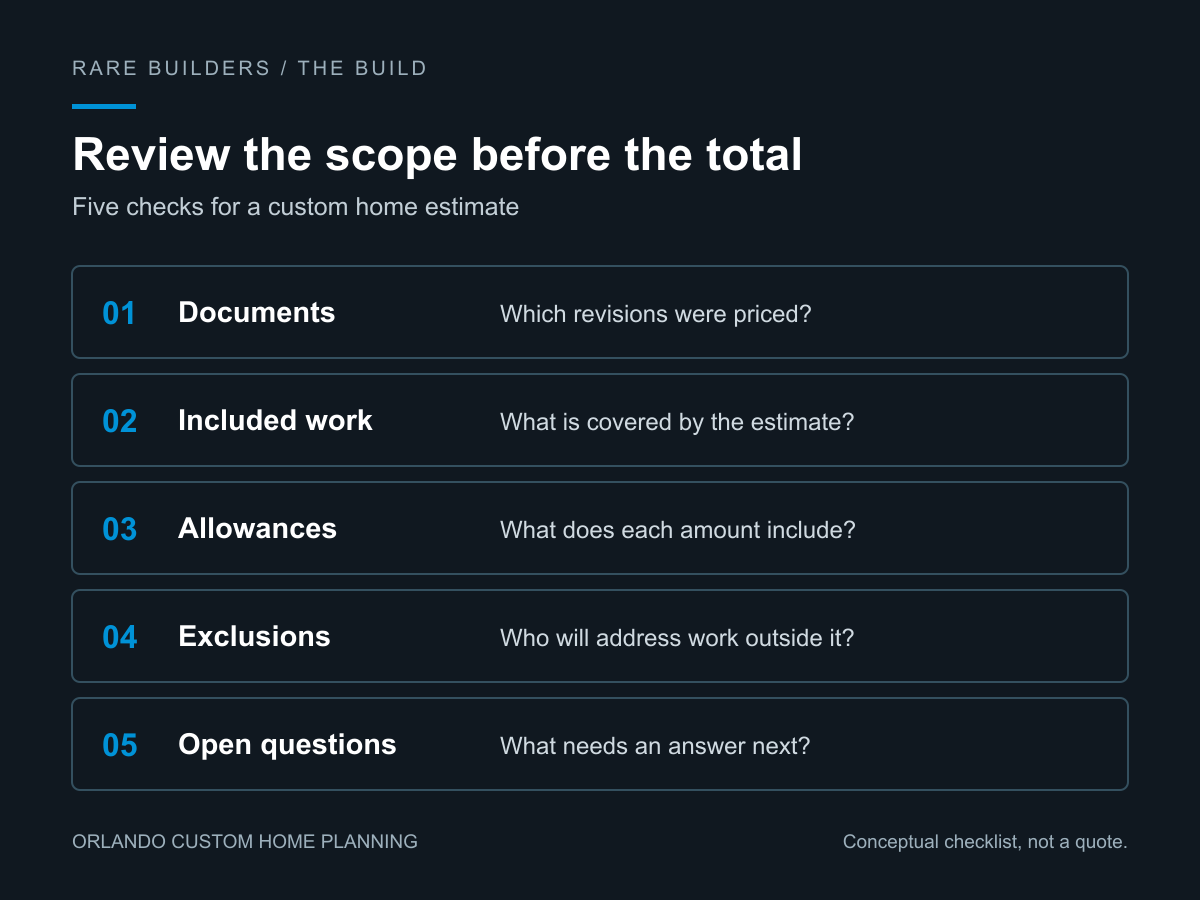
Two estimates can describe the same house and still price different work. One may include a selected window package; another may carry an amount for windows that have not been chosen. A total is useful only when you can see the scope and assumptions behind it.
For a custom home in Orlando, bring the estimate back to the drawings, the property and the decisions still open. The goal of a review meeting is a written explanation of what is included, what is outside the price and what could change as the design develops.
This guide expands the Scope and Pricing stage in The Build. It offers a way to prepare questions for your builder, rather than a construction-cost benchmark or an interpretation of your contract.
Start with the documents behind the number
Ask which dated drawings, specifications and selection records the estimate uses. Keep those references with the estimate. If one proposal uses an earlier plan, a price difference may reflect a different project rather than a different price for identical work.
List revisions made since those documents were issued. A larger opening, a changed roof detail or an expanded outdoor room deserves a clear answer: is it included in this version, awaiting pricing or outside the current scope? Avoid combining the newest drawing with an older total without confirming the connection.
The Federal Trade Commission's homeowner guidance recommends written estimates describing the work, materials, completion date and price, and asking for an explanation of substantial differences. That guidance concerns home improvements; the same habit of checking the written basis is useful when discussing a new custom home.
Separate included work, allowances and exclusions
Use three headings in your meeting notes. Under included work, record the defined items covered by the estimate. Under allowances, record amounts carried for items that still need clarification or selection, using the builder's definitions. Under exclusions, record work or costs outside that estimate and who will address them.
Do not assume an allowance includes every cost associated with a finished installation. Ask whether the stated amount includes material, delivery, tax, installation and related preparation, and where any separately priced parts appear. Also ask how a difference between the allowance and the eventual selection will be documented under your agreement.
An exclusion is not automatically a problem. An unassigned exclusion is a question to resolve. If landscaping, a pool or owner-supplied equipment sits outside the proposal, identify the responsible party and the interfaces with the house. Keep those items visible in your overall project planning rather than treating the construction estimate as the complete project budget.
Test one item from selection through installation
Choose a meaningful item and follow it through the scope. For a hypothetical bathroom, a tile amount alone does not explain the entire assembly. Ask what tile area and product assumptions were used, whether installation and preparation appear elsewhere, and what remains undecided.
This example is a review exercise, not a specification or a description of a Rare Builders project. The useful outcome is a traceable explanation: this item is covered here, this related work is covered there, and this decision remains open.
Use the custom home selections checklist to track product decisions and timing. The estimate review serves a different purpose: establishing how the current price treats those decisions.
Give site assumptions their own questions
Ask what property information supported the site-work estimate and which conditions still need investigation. An available survey, a proposed grading approach and an unresolved utility connection should not be treated as interchangeable evidence.
For each open site issue, record the assumption being used, what will confirm or change it, and who is responsible for the next step. Do not substitute a generic allowance for an explanation of the unknown. If the property is still under consideration, the custom home lot review guide addresses the earlier feasibility questions.
Compare differences before making a choice
When reviewing more than one estimate, make a short comparison sheet using the same categories and document revisions. Mark each item as confirmed, different or unanswered. Ask for clarification where the categories do not match instead of filling gaps with your own assumed price.
Keep optional upgrades separate from the base proposal, and ask whether each option affects other work or timing. A choice that changes an opening, cabinetry or an electrical requirement may need more than a product-price adjustment. The team should explain the connections before you treat the option as a complete alternative.
Agree how later changes will be reviewed and recorded. AIA Contract Documents' change-order overview explains that changes can affect scope, cost and schedule and emphasizes documenting those effects. Your own agreement determines the applicable process; a general guide does not replace it.
Bring these six questions to the estimate review
Use these questions to organize the conversation.
- Which drawing and specification revisions does this estimate price?
- What is included, and which items remain allowances or open assumptions?
- What does each allowance cover, and how will differences be handled?
- Which exclusions need a separate owner, price or coordination decision?
- Which site conditions and selections still need confirmation, and by when?
- How will scope, price and schedule changes be reviewed and recorded?
Leave the meeting with an answer or a named next action for each question. Keep the revised estimate and clarification notes together so the next discussion starts from the same information.
If you are planning a custom home in Orlando, start a conversation about your project. A clear scope discussion helps connect the home you intend to build with the work being priced.
Sources checked October 29, 2026. General planning information; the project documents and agreement govern the actual scope and change process. Obtain project-specific professional advice where needed.